
If you’re anything like me, you’ve probably wrestled with this tension:
There’s so much I want to teach my students… but not nearly enough days in the school year to do it.
I want to teach deeply. I want my students to understand the richness of church history, theology, and Christian diversity. But when I look at the calendar—peppered with assemblies, testing days, and the occasional surprise field trip—I realize I just can’t get to it all.
So, what do we do when time is tight but the content still matters?
I’ve found that class projects can be a lifesaver. They let students explore broad material, encourage class discussion, and give me a meaningful (and low-stress) way to assess their learning.
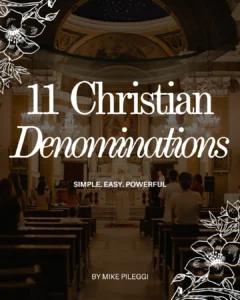
The Christian Denominations Project: A Real Example
This year, I wanted to expose my students to different Christian denominations—Eastern Orthodox, Roman Catholic, Baptist, Pentecostal, and more. But I didn’t have the bandwidth to give each group a full lecture.
So, I turned the learning over to them.
Using Trevin Wax’s excellent Quick Guide to Christian Denominations, I created a class project where each group teaches the class what they learned from their assigned section.
- They build a slide presentation
- Present in 3 minutes or less
- Then answer on-the-spot questions from their section (no notes!)
I grade them based on presentation clarity, speaking skills, knowledge of content, and teamwork. It’s engaging. It sparks good questions. And—it counts as a test grade.
Why This Works
- It saves time—students learn from each other, not just you.
- It encourages student ownership and peer teaching.
- It sparks rich class discussion and deeper engagement.
- It’s an authentic, formative assessment that’s actually fun.
Plus, it helps students see that Christianity is not a monolith. There’s variety, history, and nuance—and now they know how to spot it.
Want to Use This in Your Class?
I’ve packaged everything you need in a free, downloadable resource:
Click here to download the project for free (PDF)
It includes:
- Full instructions for students
- Group list of denominations
- A clear grading rubric
- Tips to make it work smoothly in your class
Sometimes, when there’s too much to teach and not enough time, a well-designed project can do more than fill in the gaps—it can energize your classroom, empower your students, and still hit your learning goals.
Let me know if you try it! I’d love to hear how your students respond.